
Customer Loyalty in Medspas: Why Rewards Alone Aren't Enough
42% of loyal customers produce 80% of revenue. A rewards program creates expectations; the experience is what keeps them.
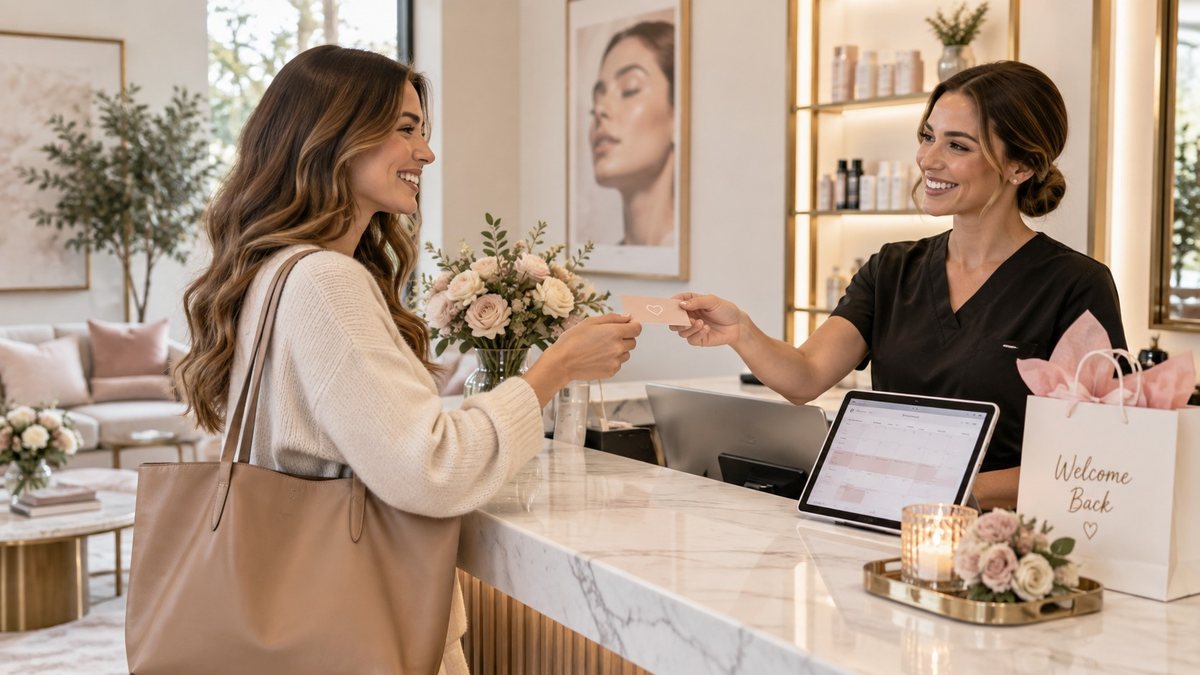
Acquiring a new patient is important, but having that same patient return repeatedly is how an aesthetic practice builds real long-term value. Treatments like injectables, laser services, facials, and more are natural candidates for repeat visits. Because of this, creating customer loyalty is an important part of the medical aesthetics industry.
The Zenoti 2025 Beauty and Wellness Benchmark Report found that 42% of the company’s most loyal customers produced 80% of all revenue, and only 58% of their one-time clients created only 20% of all revenue. That represents a large opportunity for retained client growth, but retaining those clients requires more than just putting together a rewards program.
A Loyalty Program Only Creates Expectations
A customer loyalty program is a two way street. Every time someone chooses to go to one business repeatedly, they create expectations of how the company will treat and recognize them because of it.
According to HBR, a member of a loyalty program may feel less satisfied with a service experience, and even discontinue using the service, if there’s an issue with the experience provided. This is due to the fact that loyalty programs imply an expectation to customers: I’m loyal to you, so I expect you to treat me like a loyal customer.
Some examples of this at a medspa are when long-time patients don’t receive an immediate appointment, get inconsistent communication, or are given the same promotions and pricing as patients that haven't been there before.
The Experience is The Loyalty Program
A medspa loyalty program should go beyond discounting products/services for repeat business.
The definition of “customer experience” refers to all aspects of how your customers interact with you. This is from every touchpoint, including when they first found you on socials, scheduled an appointment, checked in, received treatment, had a follow up, and more. Because of that, the customer experience is really defined by a customer’s response to direct and indirect communication and how their overall satisfaction develops through the accumulation of all of those experiences over time.
In a medspa setting, loyalty could mean remembering what each patient prefers, making it easy to schedule an appointment, sending reminders about when a service needs to be done again, giving exclusive access to new services, and overall making it easier for repeat patients to engage with the office.
Retention Should Feel Personal
Overall, the goal shouldn’t be to make patients spend more often, but instead give them a reason to want to come back. A discount could encourage them to buy from you again, but it can’t create an ongoing customer relationship. The best loyalty strategy for medspas is less about “what rewards can we offer,” and more about “because this person continues to choose us, how can we do something different for them?”
That mentality is what makes loyalty a part of the overall brand experience instead of a marketing program.
Mon