Your Medspa Marketing Should Answer the Question Before a Patient Asks
Every patient has questions at every point of the decision. Predictive communication answers them before they're asked, and makes marketing feel like better service.
Medspa treatments are usually booked by people searching for the best treatments available. They don't just run an ad and wait for a patient booking confirmation. Every patient has questions at every point of the decision-making process: "How much downtime will I need?" "When can I see the results?" "Am I a good candidate for this treatment?" "How many times do I need to follow up?"
When marketing your medspa, you can reduce the uncertainty and anxiety of these questions by using predictive communication. This type of communication allows medspas to communicate with future patients based on their own progression through their decision-making process.
Pre-appointment: build confidence
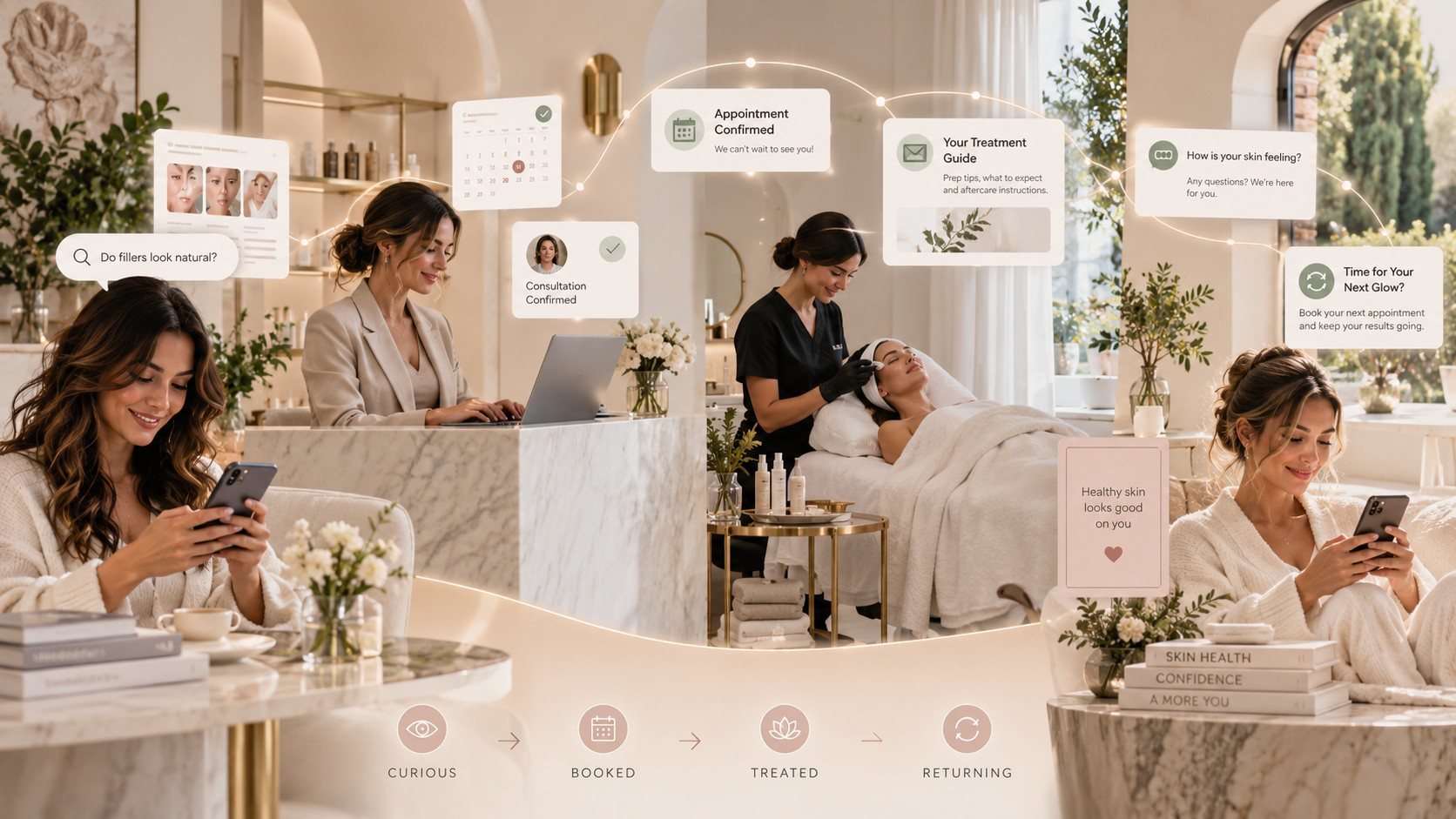
The moment a patient makes a booking for a consultation, they start thinking about all the details. Instead of having to search your FAQ for answers, medspas can pre-schedule an automatic response via email or text to give the new patient information on what to expect during the consultation. These emails include what they should do before the treatment, if there's anything they need to bring, or even more information about the treatment they're interested in booking.
This type of communication builds confidence, reduces stress, and eliminates unnecessary calls. It also creates trust and a sense of personalization. In almost all industries, personalization is expected by customers. One study shows that 71% of consumers expect their communication with a company will be personalized, and 76% are frustrated when they don't receive it.
After treatment: send messages at the perfect time
The customer journey doesn't end with the appointment. Someone receiving Botox would want to know as soon as possible when they can expect to see some effect. A facial patient would want to have a sheet outlining what to do immediately after the procedure in order to care for their skin in the best way possible. A week or two from now, that same patient could receive another email reminding them when they might want to contact the office to book the next round of treatments.
While the actual content of these messages is important, it's the timing of the messages that makes them effective.
Rather than having patients try to recall all the information they're given at an appointment, the practice provides important and relevant information at times when the patient is most likely going to need it.
Follow-up should be part of the marketing strategy
The follow-up also matters for leads who haven't booked yet. As reported by the American Med Spa Association, there seems to be a common misconception about how many of these businesses don't have a lead gen issue, but instead a patient journey issue. A prospective patient finds a medspa through some means like word of mouth or online search, researches it by reading reviews, visits the website and compares several providers before determining they're ready to book. A prospect that hasn't scheduled doesn't mean that they can't be brought back in. By creating strategic follow-up messages, like sharing other patients' results or showing educational content, you can address each additional reason why someone might not want to proceed.
Better marketing feels like better service
Medspa marketing should never stop after scheduling an appointment. Every piece of communication for a patient is an additional opportunity to make their journey easier. Just because you're communicating more doesn't mean you're being intentional with your communication. When a medspa can see where a patient is heading after they've visited your site or called your office, marketing starts to look and feel like better service. This is why a patient can go from curious, to booked, to treated, and to a repeat, loyal patient.
Mon